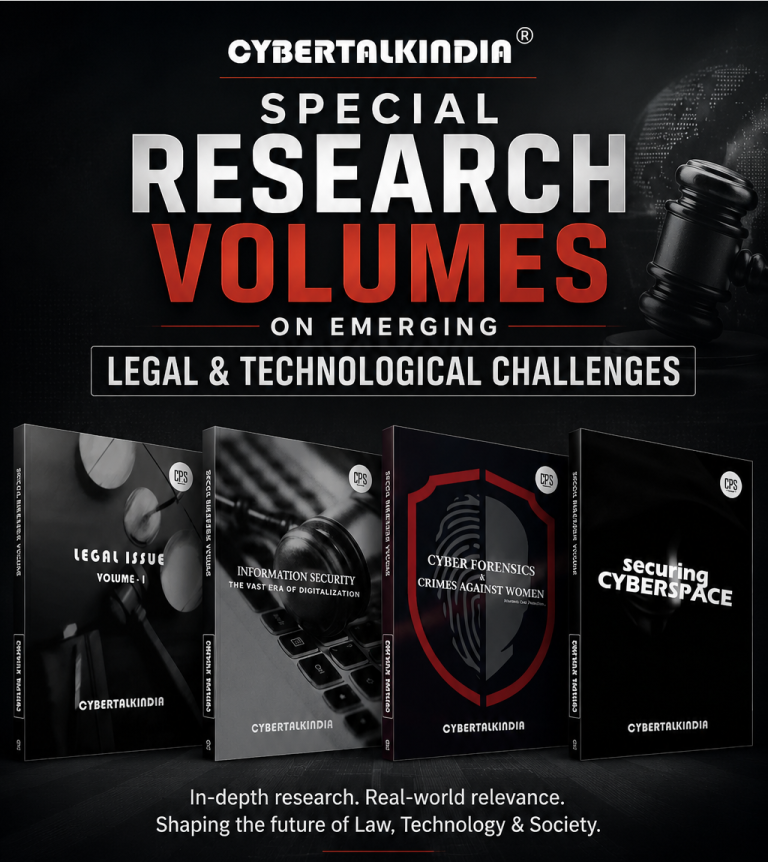
About This Book
In today’s digitally connected world, Information Technology has become an integral part of every aspect of human life. From communication, education, healthcare, banking, and commerce to governance and entertainment, digital technologies have transformed the way individuals, businesses, and institutions interact. The rapid evolution of cyberspace has accelerated the transition from traditional paper-based systems to secure, efficient, and technology-driven digital ecosystems.
With this digital transformation comes the increasing importance of Cyber Law—the legal framework that governs activities conducted in cyberspace. Cyber Law regulates the use of the internet, digital communications, electronic transactions, data protection, privacy, cybersecurity, intellectual property, digital evidence, electronic contracts, and cybercrime. It provides the legal foundation necessary to ensure trust, accountability, and security in the digital environment.
Every action performed in cyberspace—whether sending an email, executing an online payment, accessing cloud services, publishing digital content, using artificial intelligence, or engaging on social media—carries legal implications. Likewise, every cyber incident, security breach, or misuse of technology invokes corresponding legal rights, obligations, and remedies. As technology continues to evolve, understanding Cyber Law has become essential for individuals, organizations, legal professionals, policymakers, and businesses seeking to operate responsibly and securely in the digital age.
Cyber Law is no longer a niche area of legal study; it is a fundamental pillar of modern digital governance, enabling innovation while protecting the rights, privacy, and security of all participants in the interconnected world.